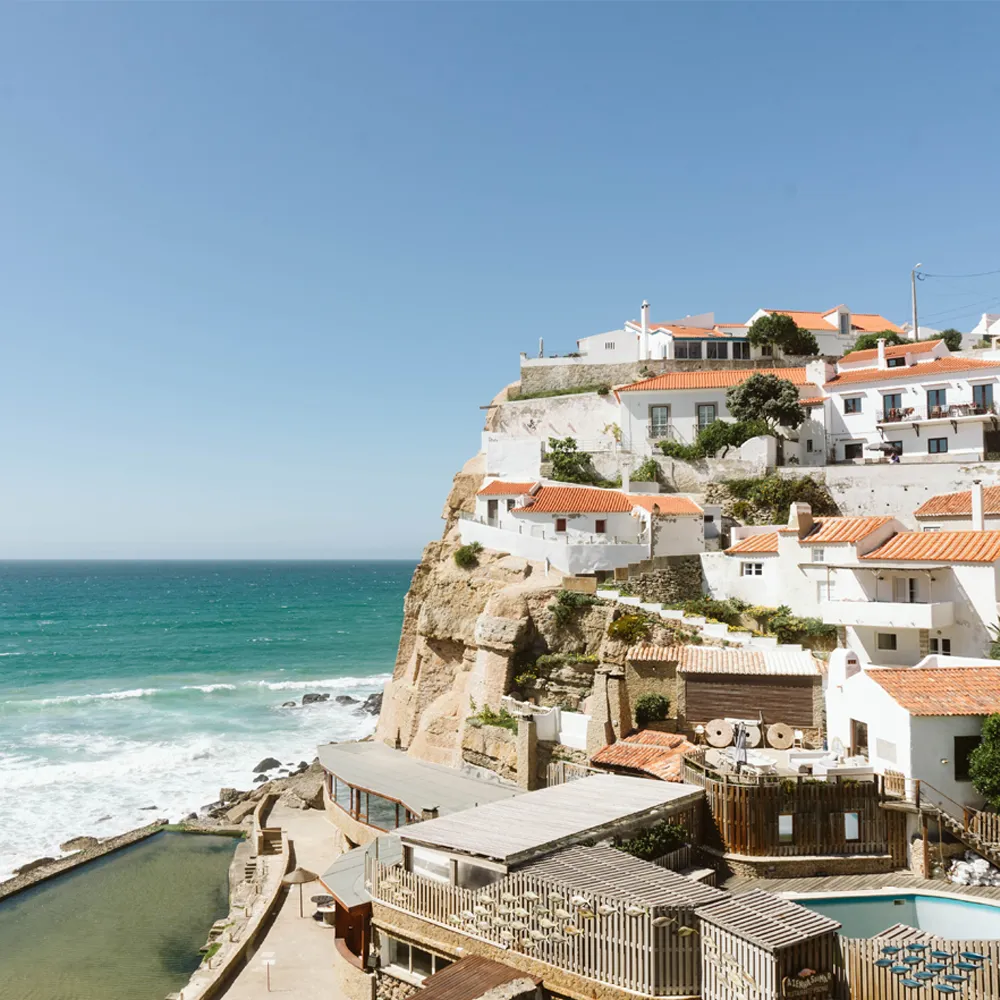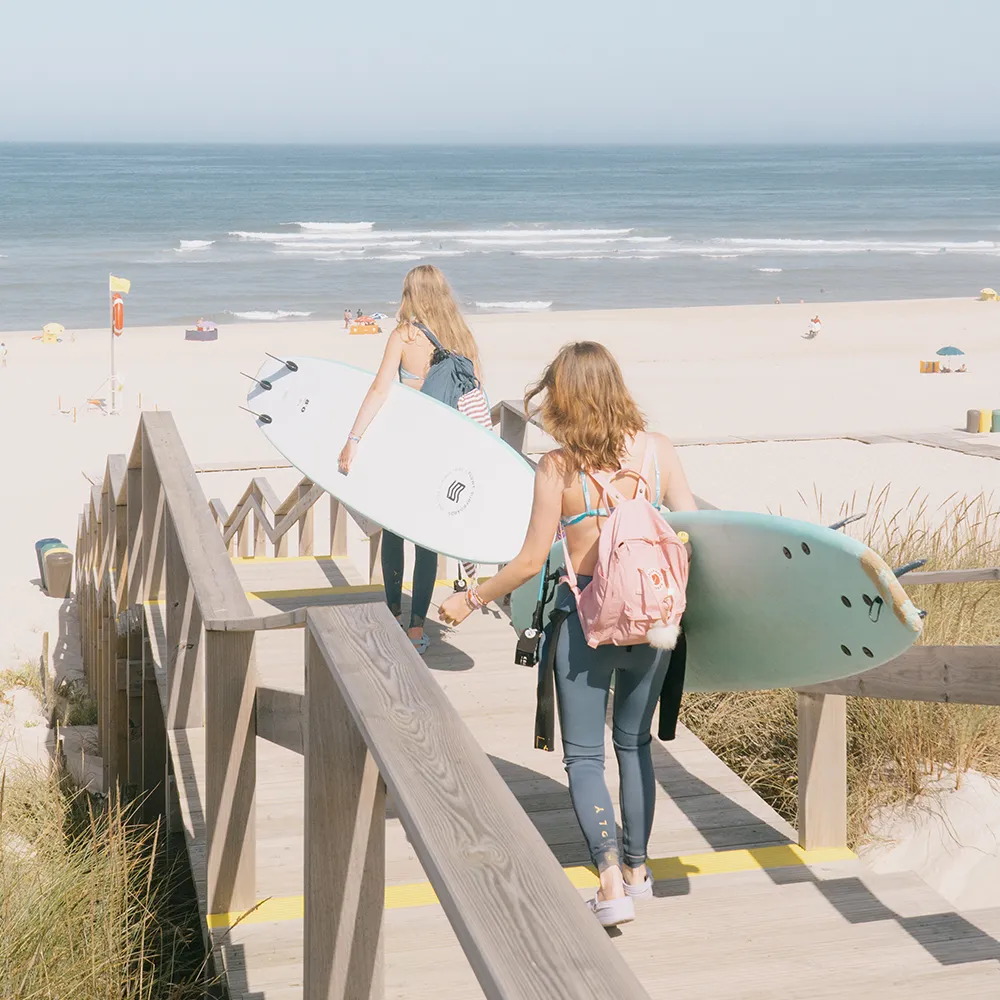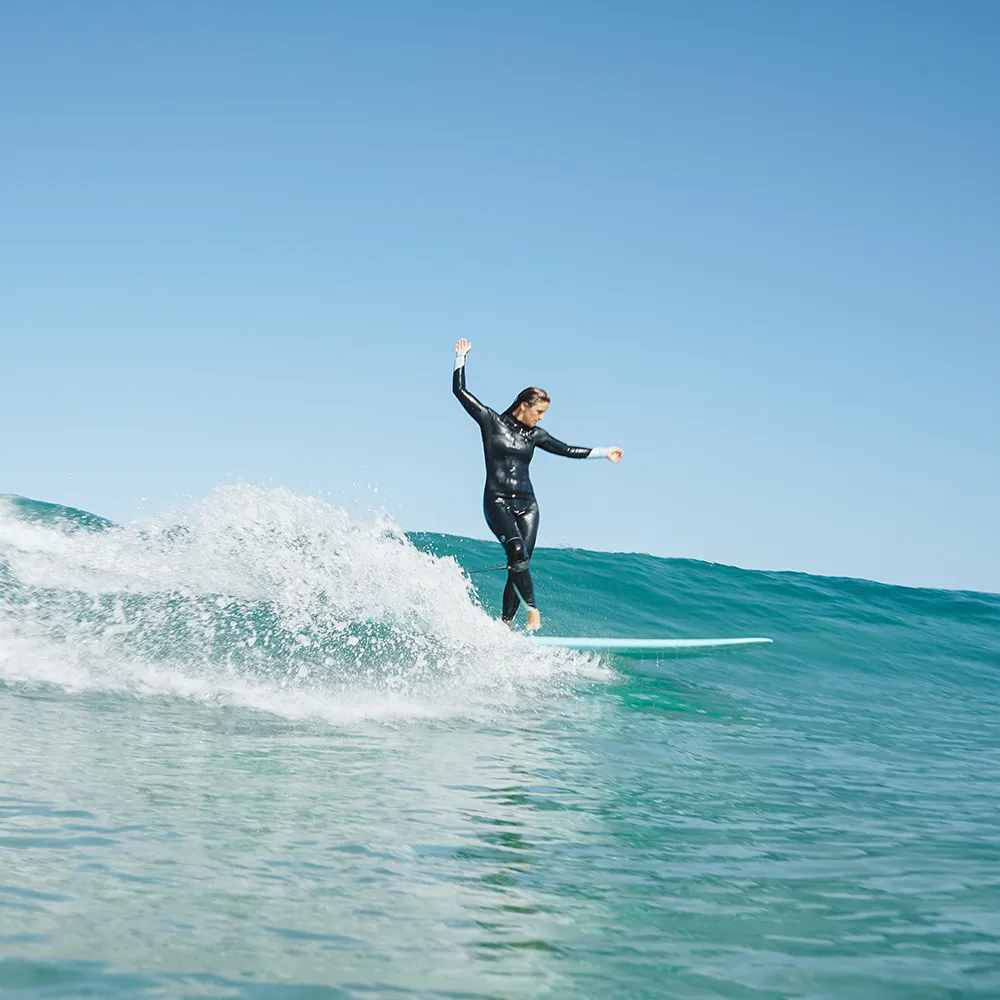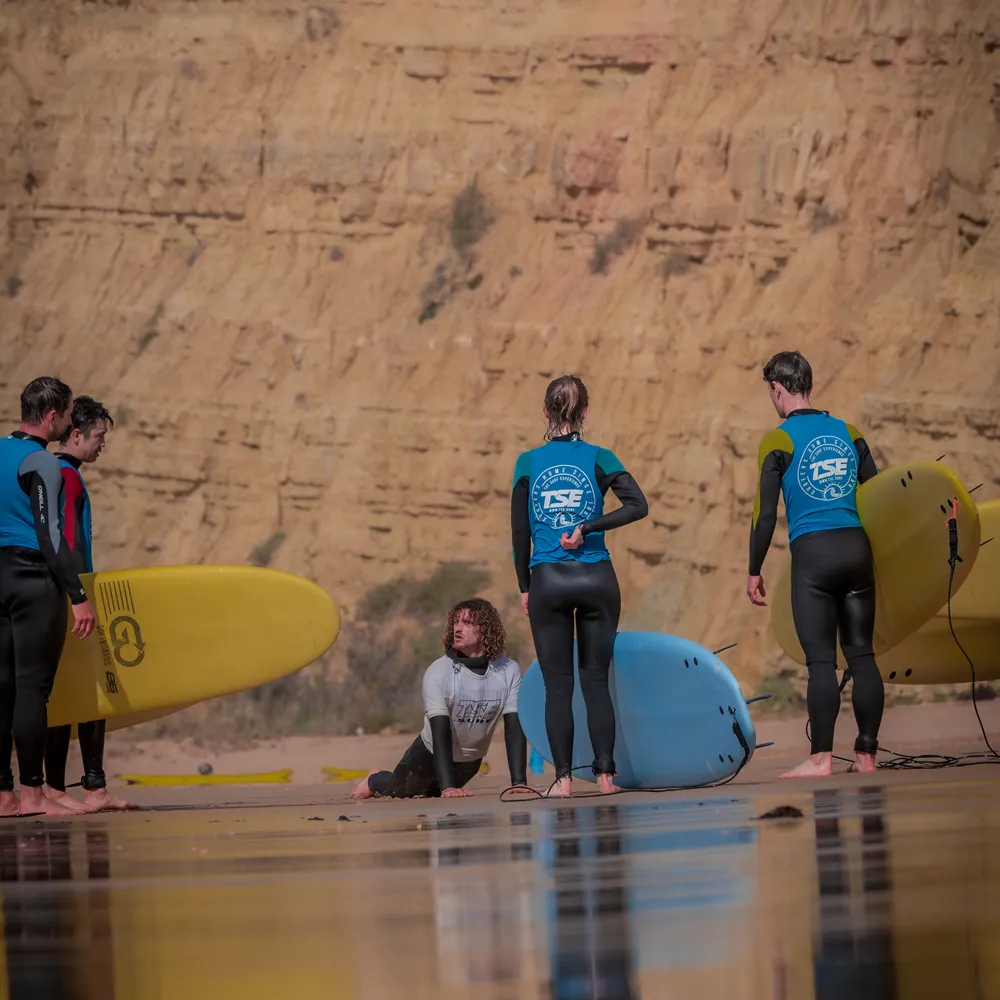
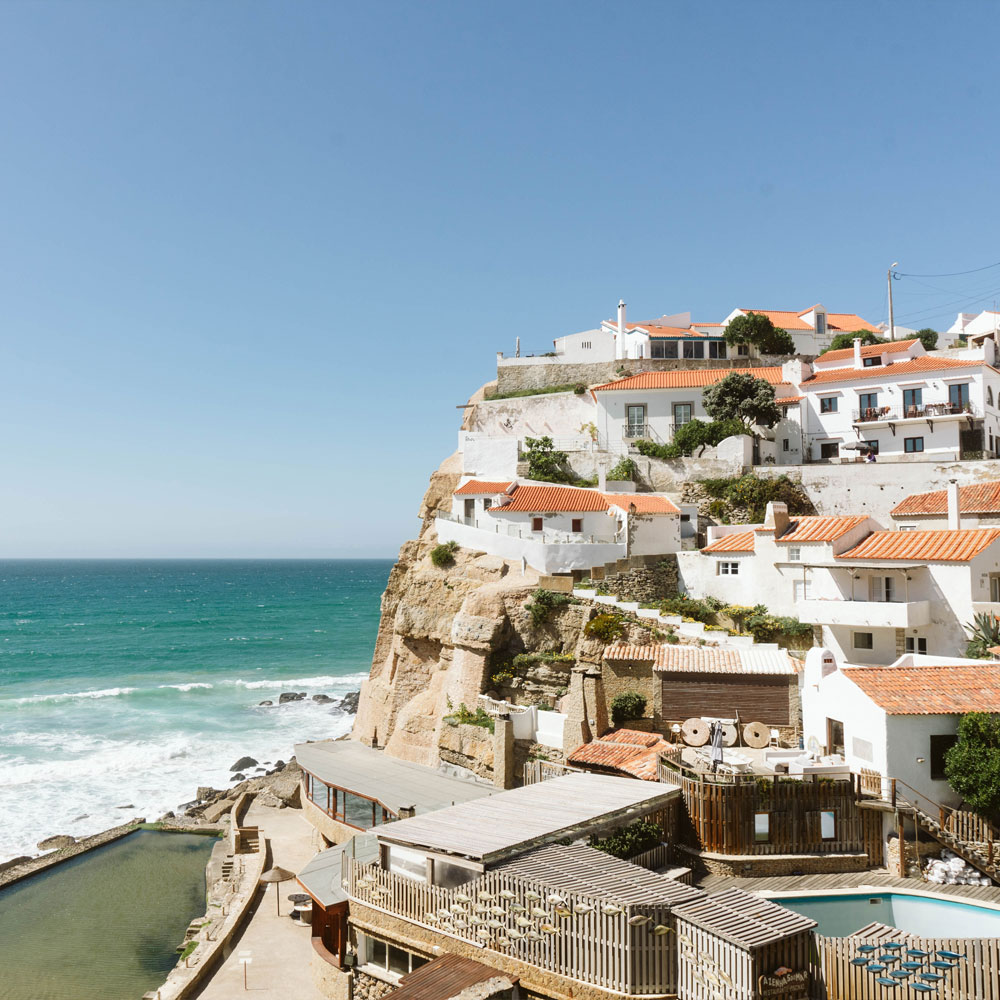
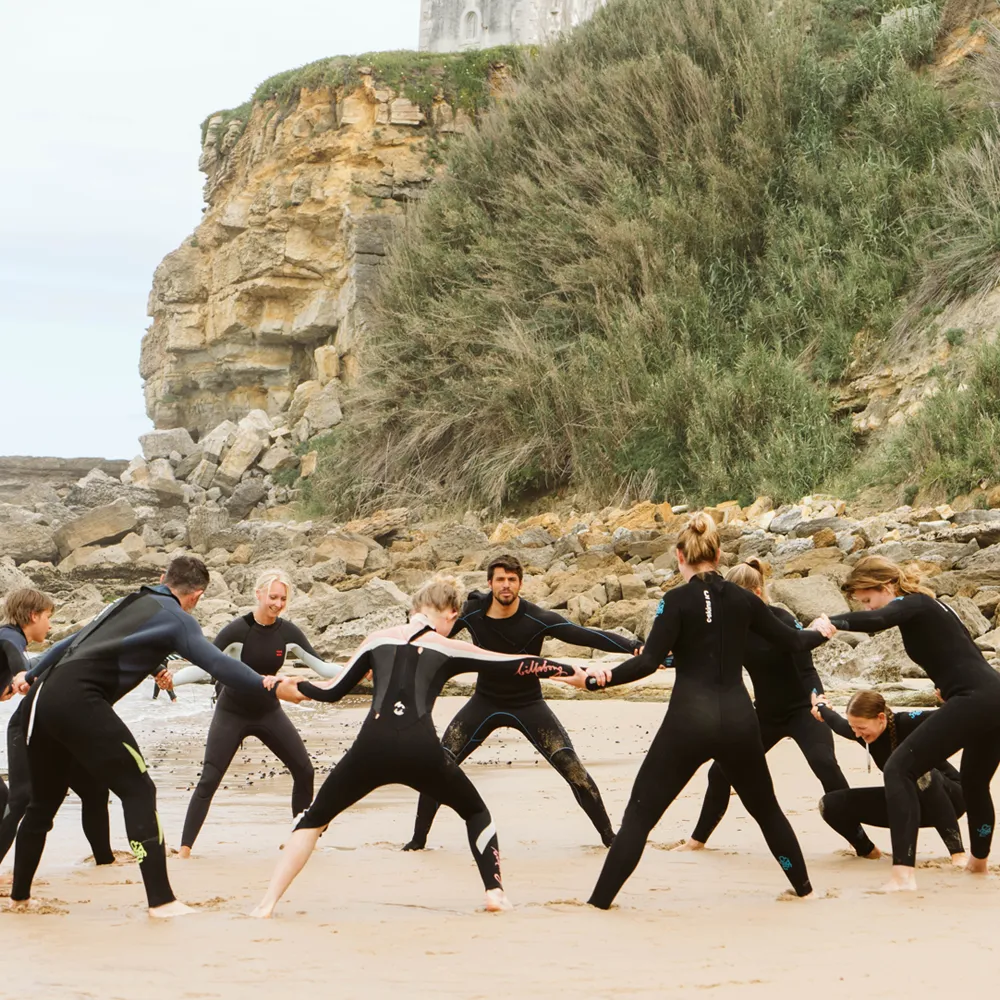
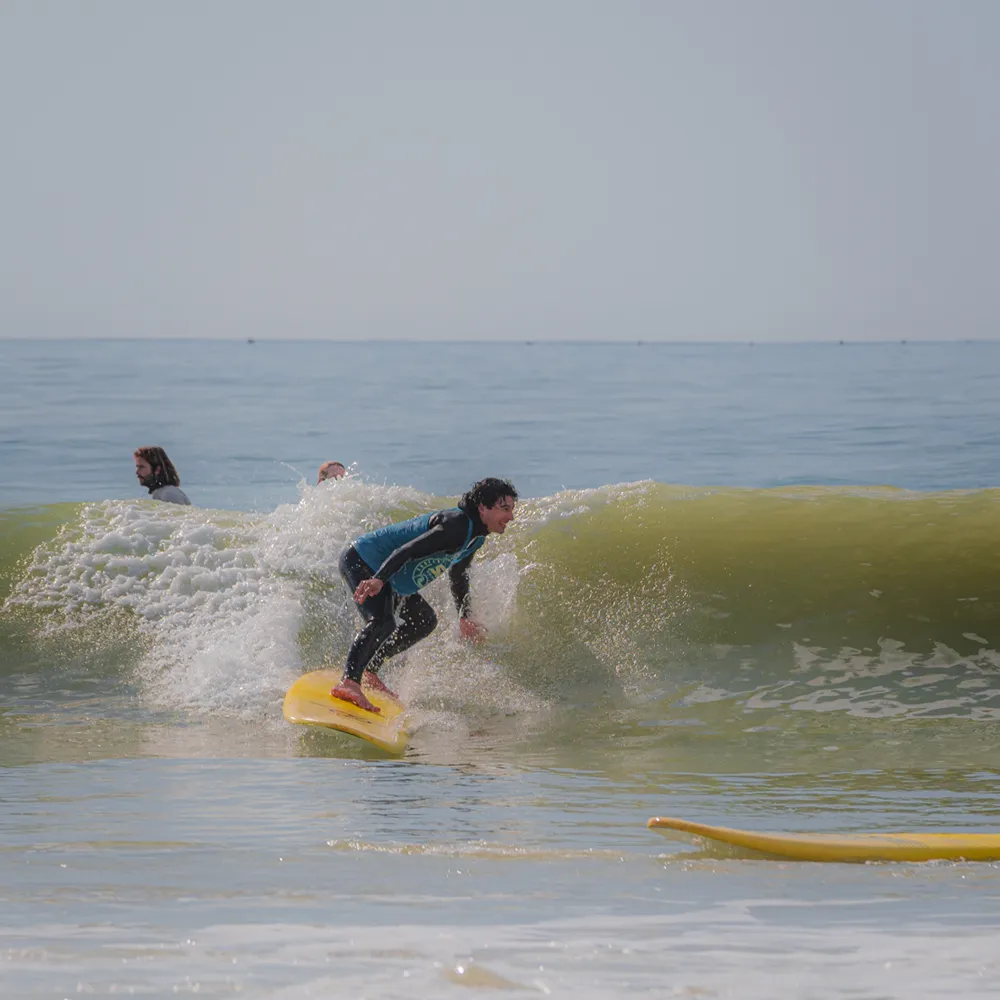
Portugal is one of Europe’s most reliable surf destinations — and one of the easiest places to build an unforgettable trip if you plan it with the ocean in mind. You’ve got a huge spread of coastlines, which means you can nearly always find a wave somewhere… but the Atlantic can switch fast.
The difference between an epic session and a sketchy one usually comes down to a few simple safety decisions: where you paddle out, what the tide is doing, and whether you’ve chosen a beach that matches your level.
The Ultimate Safe Surf Travel Guide
Quick Safety Snapshot
Best For
Total beginners through to advanced (if you pick the right region).
Ocean Power
Medium to high (Atlantic swell can be heavy).
Main Risks
Rip currents, cold water, shorebreak, rocks/reefs at points, big winter swell.
Safest Setup for more Travellers
Sandy beaches + coaching + short transfers + flexible surf plan.
Family Friendly
Yes (especially Algarve + some central coast options).
When to Visit Portugal
Portugal works year-round, but the type of surf changes with the seasons:
• Spring (Mar–May): A sweet spot. Plenty of swell, fewer crowds, generally manageable conditions. Great for progression.
• Summer (Jun–Aug): Smaller surf on average, warmer days, good for beginners — but expect more people in the water and on the roads.
• Autumn (Sep–Nov): Arguably the best all-round surf season. More consistent swell returns, water still relatively warm, and loads of variety.
• Winter (Dec–Feb): Powerful swells, stronger currents, colder water, and more days where you need to be selective. Amazing for experienced surfers — not ideal for first-timers unless you’re coached and staying somewhere with sheltered options.
• Spring (Mar–May): A sweet spot. Plenty of swell, fewer crowds, generally manageable conditions. Great for progression.
• Summer (Jun–Aug): Smaller surf on average, warmer days, good for beginners — but expect more people in the water and on the roads.
• Autumn (Sep–Nov): Arguably the best all-round surf season. More consistent swell returns, water still relatively warm, and loads of variety.
• Winter (Dec–Feb): Powerful swells, stronger currents, colder water, and more days where you need to be selective. Amazing for experienced surfers — not ideal for first-timers unless you’re coached and staying somewhere with sheltered options.


Top Sruf Regions In Portugal
Portugal’s biggest advantage is variety. If one coast is too big or windy, you can often pivot.
BEST ALL-ROUNDER
A classic base because you can often find a protected option depending on wind and swell direction. Great for mixed-ability groups.
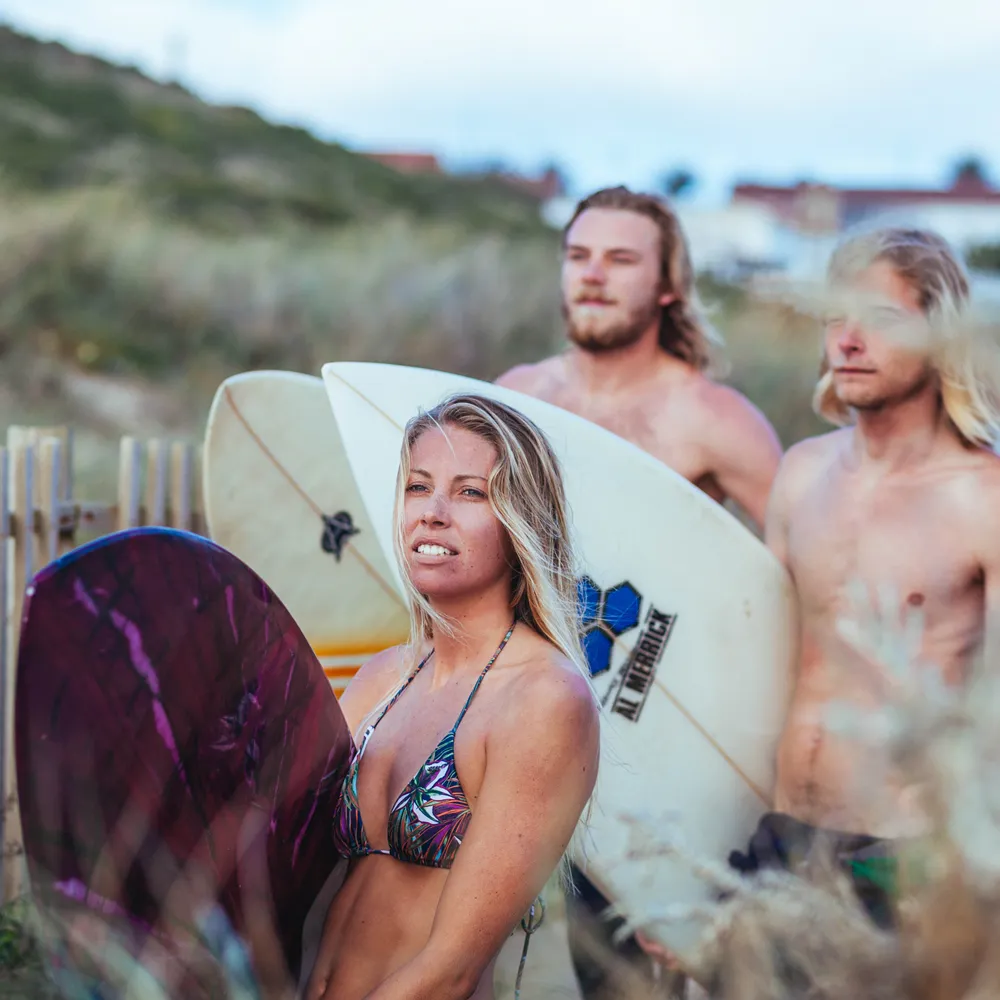
Portugal Ocean Safety
Simple rules that prevent 90% of problems
Respect the Atlantic
If it looks heavy from the beach, it is heavy. Choose a different spot or sit it out.
Rips are Normal Here
If you’re getting pulled, don’t fight it — stay calm, float, and work sideways out of the current.
Tide Changes Everything
A wave that’s mellow at mid-tide can become fast and dumpy at low tide (and vice versa).
Don’t Surf Alone In New Spots
Especially around rocks/points.
Wear The Right Wetsuit
Cold water fatigue is real — it affects decision-making and safety.
Health + Practical Safety
Travel Made Easy
Travel Insurance
Make sure it covers surfing (and any other activities you’ll do).
Sun + Wind
Portugal can feel cool but still burns you — pack zinc, sunscreen, and a wind layer.
Hydration
Especially after long sessions and salty wind days.
Road Safety
If you’re hiring a car, take it slow on coastal roads and don’t rush dawn missions when you’re tired.
Getting There + Getting Around (the safe way):
Most travellers fly into Lisbon (LIS) or Faro (FAO) depending on where you’re staying. From there, the safest, easiest move is to pre-arrange transfers or keep driving simple and avoid late-night arrivals on unfamiliar roads. If you tell us your dates and rough plan, we’ll point you to the smoothest airport + region combo.
Getting There + Getting Around (the safe way):
Most travellers fly into Lisbon (LIS) or Faro (FAO) depending on where you’re staying. From there, the safest, easiest move is to pre-arrange transfers or keep driving simple and avoid late-night arrivals on unfamiliar roads. If you tell us your dates and rough plan, we’ll point you to the smoothest airport + region combo.
Things To Do Between Surfs
Portugal is perfect for building a trip that doesn’t burn you out:
• Coastal hikes and cliff walks (great on rest days).
• Cafés, seafood spots, and local markets.
• Yoga / mobility sessions to keep shoulders and hips happy.
• Day trips into Lisbon, Sintra, or small fishing towns depending on your base.
• Coastal hikes and cliff walks (great on rest days).
• Cafés, seafood spots, and local markets.
• Yoga / mobility sessions to keep shoulders and hips happy.
• Day trips into Lisbon, Sintra, or small fishing towns depending on your base.